
How Realtor Client Acquisition Changes with AI Marketing in 2026
Something quiet and permanent happened to real estate lead generation over the last two years. Buyers and sellers stopped scrolling through ten blue links and started asking AI assistants direct questions: “Who’s the best listing agent in my neighborhood?” and “Which realtor actually knows this school district?” The agents who get named in those answers are winning the client before a single form is filled out.
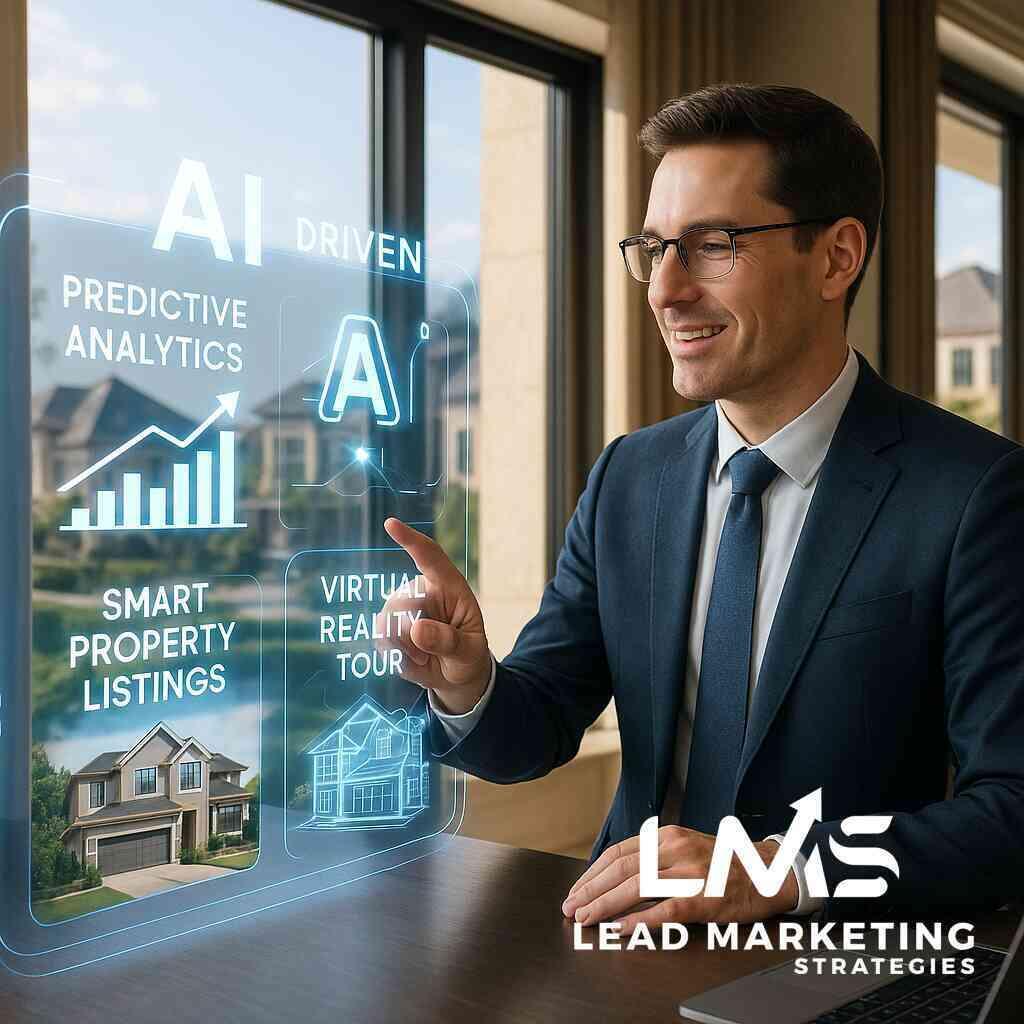
AI marketing for realtors in 2026 means optimizing to be recommended inside AI answers, not just ranked in search results. That shift touches everything: how you structure your site data, how fast you respond to a late-night inquiry, how you scale neighborhood content, and how you prove your local expertise to a machine that reads the whole internet in seconds. Human relationships still close deals. But the path to the client now runs through answer engines.
We work with real estate teams every day, and the ones pulling ahead in 2026 share the same playbook. Here it is, in plain language.
What Is Answer Engine Optimization and Why Does It Matter for Realtors?
Answer Engine Optimization (AEO) is the practice of structuring your online presence so AI tools like ChatGPT, Perplexity, Gemini, and Google AI Overviews name you when someone asks a real estate question. It matters because those tools increasingly answer the question on the spot, often without a click to your website.
Traditional SEO still matters. We are not telling you to abandon it. But the search results page itself has changed. Google’s AI Overviews now summarize answers at the top of results for thousands of local queries. Perplexity and ChatGPT pull from review sites, directories, news mentions, and your own site to assemble a recommendation. If your data is thin, inconsistent, or missing, the model picks someone else.
In our experience, this is where most agents are invisible without knowing it. They rank fine in the classic map pack but never appear in AI-generated recommendations. The fix starts with an honest audit.
Run a Digital Share of Voice Audit This Week
Open ChatGPT, Perplexity, and Google and ask the exact questions your clients ask:
- “Who is the top luxury listing agent in [your neighborhood]?”
- “Which realtor in [your city] has the most five-star reviews for first-time buyers?”
- “What real estate agent knows the [specific subdivision] market best?”
Write down who gets named. If it is not you, that is your gap map. Repeat the exercise monthly and track movement. This simple habit tells you more about your real visibility than most dashboards, and it costs nothing.
How Do You Get Your Real Estate Business Recommended by AI Assistants?
You get recommended by AI assistants when three things line up: clean structured data on your own site, consistent mentions across trusted third-party sources, and content that answers specific local questions in plain language. AI models cross-reference all three before they name an agent.
Let’s break down each piece, because this is the heart of AI marketing for realtors right now.
1. Structured Data and Schema Markup
Schema markup is code that tells a language model exactly what you do and where you do it. Without it, an AI has to guess. With it, the model can parse your areas served, transaction history, service types, and reviews instantly.
At minimum, your site should carry:
- LocalBusiness or RealEstateAgent schema with your name, service area, phone, and address
- FAQ schema on pages where you answer common buyer and seller questions
- Review and AggregateRating schema tied to your real, verified reviews
- Service schema for buyer representation, listing services, and any specialty niches
Most agent websites we audit are missing all four. This is one of the highest-leverage fixes available, and it is exactly the kind of work our real estate SEO team handles as a foundation before anything else.
2. Third-Party Citation Blasting
AI engines do not trust your website alone. They look for confirmation elsewhere: regional news outlets, local business directories, chamber of commerce listings, industry association pages, and community sponsorships. Consistent mentions across those sources act as secondary validation.
We often see agents with a beautiful site and almost no third-party footprint. The models treat that as low confidence and recommend a competitor with messier branding but wider coverage. Build the citations deliberately. Keep your name, address, and phone number identical everywhere.
3. Answer-Shaped Content
AI assistants quote content that answers a question in the first two sentences, then supports it with detail. That means question-style headings, a crisp direct answer right underneath, and short paragraphs. Long, winding introductions get skipped.
This is also why hyperlocal pages matter so much. A page titled “Living in [Neighborhood]: What Buyers Should Know in 2026” that answers real questions about schools, commute times, and price ranges is exactly the kind of source an AI will cite. For a deeper walkthrough, see our guide to hyperlocal SEO for real estate agents.
How Is AI Changing Lead Qualification and Follow-Up?
AI changes lead qualification by scoring prospects on real behavior instead of gut feel, then responding within seconds at any hour. Static CRMs that wait for an agent to log in are being replaced by dynamic platforms that watch intent signals and act on them automatically.
Behavioral Lead Scoring
Modern stacks can track granular behavior: a prospect viewed four-bedroom homes in a specific zip code three times at 10 PM, opened two price-reduction alerts, and returned to your listing page from a paid ad. That pattern earns a lead weight that pushes them to the top of your queue.
What this does for a busy agent is remove the guesswork. Instead of calling a list top to bottom, you call the people whose behavior says they are ready. In our experience, teams that adopt behavioral scoring stop losing warm leads in the noise of a shared inbox.
Instant AI Text and Voice Triage
Roughly half of real estate inquiries arrive outside business hours. An AI SMS or voice agent can answer detailed listing questions immediately, qualify budget and timeline, and book the appointment straight into your calendar. When a lead is clearly hot, it hands off to you with the full conversation attached.
The technology has gotten good enough that most prospects do not realize they are talking to software until they are already on your calendar. That is the point. Speed to lead still wins, and AI makes round-the-clock speed affordable for solo agents, not just big teams. If you want that layer built into a broader funnel, our real estate lead generation services cover the full stack.
How Do Realtors Scale Hyperlocal Content Without Sounding Robotic?
Realtors scale hyperlocal content by using AI for research, drafting, and repurposing while a human supplies the local judgment, stories, and opinions that make the content worth reading. AI handles volume. You handle voice.
The workflow we recommend looks like this:
- Feed the model real inputs. Recent sales data, neighborhood quirks, school boundary changes, new development news, your own showing notes.
- Draft in batches. Generate outlines and first drafts for neighborhood pages, market update posts, and short-form video scripts.
- Edit hard. Add the details only a local agent knows. Cut anything generic. If a sentence could describe any city in America, delete it.
- Publish and interlink. Connect neighborhood pages to your buyer and seller service pages so both readers and crawlers understand the structure.
One caution: AI-written content published without local input tends to flatten into sameness, and search engines have gotten skilled at recognizing it. The agents winning with this approach treat AI as a fast researcher and a first-draft machine, never as the final author. Our breakdown of realtor SEO tactics that drive real leads goes deeper on how to structure those pages for both humans and answer engines.
What About Paid Ads and Automated Market Reports?
AI has made paid advertising more surgical and market reports nearly instant. Both changes favor agents who move quickly.
Dynamic Ad Iteration
Predictive creative tools can now split-test hundreds of hyper-local ad variations at once, learning which headline, photo, and offer combination converts in each neighborhood. Google Local Services Ads and Meta campaigns that used to run on one or two creatives now run on dozens, with the system shifting budget toward winners daily.
The catch is tracking. Without clean conversion data feeding back into the platform, the AI optimizes toward the wrong signal and burns budget. Our Google Ads management for realtors starts with tracking, then scales creative.
Automated Comparative Market Analyses
AI-assisted CMAs can turn cold landing page traffic into a personalized home value report within about 90 seconds, complete with recent comps and a clear next step. Sellers who request a valuation while browsing at midnight get a useful report immediately, and you get a qualified appointment request in the morning. This one automation often pays for itself in a single listing.
Where Does the Human-AI Boundary Actually Sit?
The human-AI boundary sits exactly where trust and judgment live. AI should handle research, first response, scheduling, and repetitive follow-up. Humans should handle empathy, negotiation, local nuance, and the conversations that decide whether someone trusts you with their largest asset.
We have watched agents over-automate and lose deals because a bot answered a sensitive question with cheerful nonsense. We have also watched agents under-automate and lose deals because they replied 14 hours late. The winning posture is deliberate: automate the speed, protect the warmth.
Your reputation is the clearest example. Reviews and referrals are still the strongest trust signal in real estate, and AI tools can now help you request, monitor, and respond to reviews at scale. But the responses should sound like you. Our reputation management services pair automation with a human review layer for exactly that reason.
What Should a Realtor’s AI Marketing Stack Look Like in 2026?
A practical 2026 stack for a working realtor includes five pieces: a schema-ready website, a local SEO and citation program, an AI response layer for calls and texts, behavioral lead scoring inside your CRM, and a content engine for neighborhood pages and short video. You do not need all five on day one, but you do need a sequence.
Here is the order we recommend:
- Fix the foundation. Schema markup, fast mobile site, clean contact data, and a review pipeline.
- Build local authority. Citations, neighborhood pages, and consistent mentions across regional sources.
- Add speed. AI text and voice triage tied to your calendar.
- Score and nurture. Behavioral scoring with automated follow-up sequences.
- Scale paid and content. Dynamic ad creative and batch-produced hyperlocal content with human editing.
Agents who skip straight to step five usually waste money. The foundation is what makes everything above it work. If your website is holding you back, a real estate website built for conversion and schema is the place to start.
Frequently Asked Questions
How do I get my real estate business recommended by AI assistants like ChatGPT?
You get recommended by giving AI models clear, consistent, verifiable information about your business. That means schema markup on your site, identical name and contact details across directories and regional sources, a steady flow of genuine reviews, and content that answers specific local questions directly. Audit your visibility monthly by asking ChatGPT and Perplexity who the top agent is in your area, then close the gaps you find.
Is traditional real estate SEO dead in 2026?
No. Traditional SEO is still the foundation, and local map pack rankings still drive calls. What changed is that AI Overviews and answer engines now sit above those results and often answer the question before a click happens. You need both: solid SEO for the clicks and AEO for the recommendations.
Will AI replace real estate agents?
No. AI cannot negotiate a repair credit, read a nervous first-time buyer’s face, or vouch for a neighborhood from lived experience. What AI replaces is slow follow-up and manual busywork. Agents who use it well get more time for the work that actually requires a human.
How fast should a realtor respond to a new lead in 2026?
Within minutes, ideally seconds. Buyer and seller expectations have been reshaped by instant response everywhere else in their lives. An AI response layer that answers immediately and books the appointment is now table stakes, especially for inquiries that arrive at night or on weekends.
What is the biggest AI marketing mistake realtors make?
Publishing AI-generated content with no local input and automating conversations that needed a human. Both erode trust fast. Use AI to move faster, then add the judgment, stories, and specificity that only you can provide.
Ready to Put AI Marketing to Work for Your Business?
The shift to AI-driven client acquisition is already underway, and the agents who move early will own the recommendations for years. You do not have to figure it out alone. Our team builds the foundation, the content engine, and the automation layer around your business, then hands you the keys.
We would love to help. Book a free consultation with our team, or call us directly at (833) 532-3100 to talk through where you stand and what to fix first. You can also grab our mobile app to keep leads and conversations moving wherever you are: download on iOS or download on Android. Let’s make sure the next person who asks an AI for a great agent in your market hears your name.
Every article is written by one of our founders and independently reviewed by the other before it goes live.

Ken Key is the Chief Technology Officer and Co-Owner of Real Estate Marketing Strategies. A full stack software, AI, and SEO engineer, he helps agents and brokers turn real estate marketing and lead generation into measurable growth. He runs the family business with his wife, Dominique, and treats every client's pipeline like his own.

Dominique Key is the Chief Marketing Officer and Co-Owner of Real Estate Marketing Strategies. She helps agents, teams, and brokerages build brands and real estate lead generation systems that grow their real estate business. When she is not guiding client strategy, she is running the family business with her husband Ken.