
Real Estate PPC vs SEO: What Actually Works in 2026
Every agent we talk to asks some version of the same question. Should I put my marketing budget into paid ads or into organic search? It sounds simple. It is not, because the honest answer changes based on your market, your timeline, and how fast you need leads.
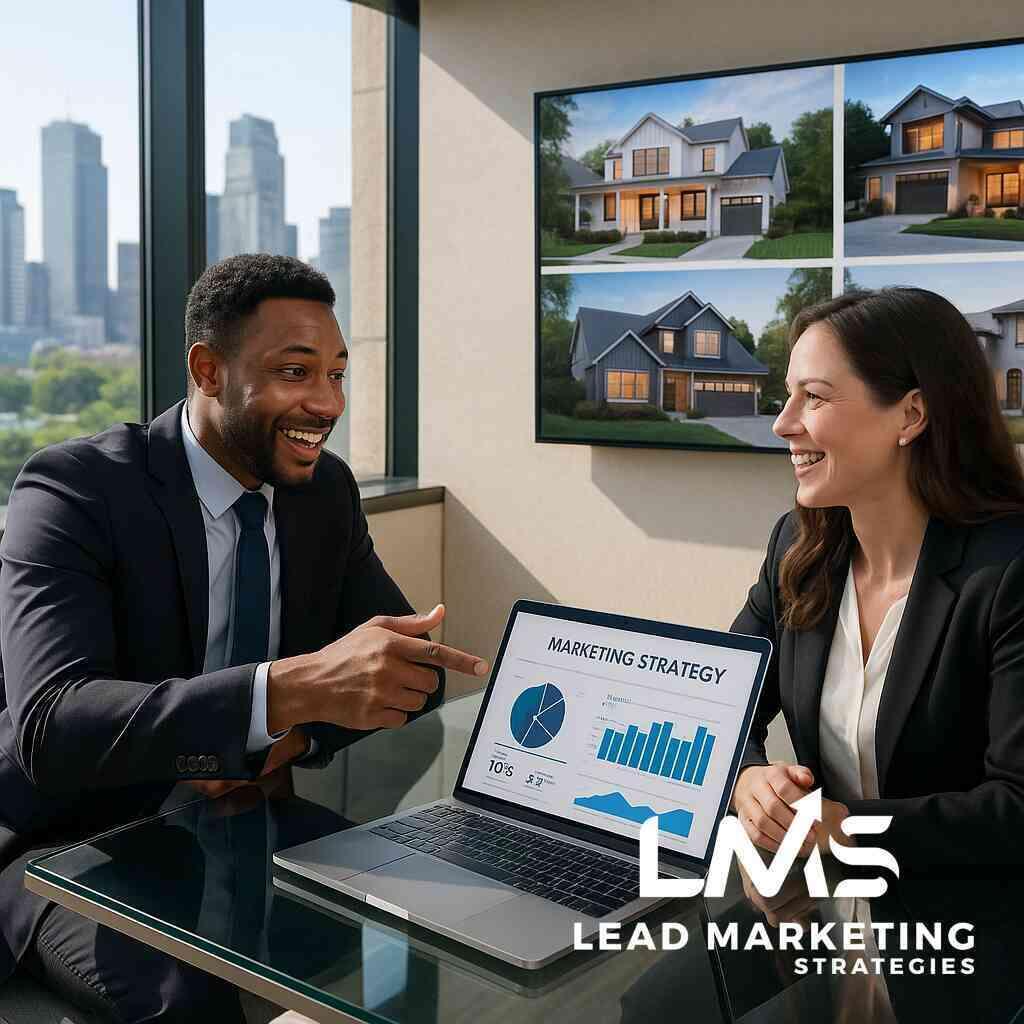
Real estate PPC delivers leads within days but costs you on every click, while SEO builds compounding organic visibility that gets cheaper per lead over time. The strongest play in 2026 is not choosing one. It is running both so they feed each other. PPC buys you speed and data. SEO buys you durability and lower cost per acquisition. Together they cover the whole funnel.
We have watched the search landscape shift under agents’ feet over the past few years. AI Overviews now sit at the top of many real estate searches. Blue links get pushed down. Ad costs keep climbing. If your strategy still looks like it did in 2022, you are leaving money on the table. Here is how we think about the real estate PPC vs SEO decision right now.
What Changed in Real Estate Search for 2026?
AI Overviews and conversational search have taken over the top of the results page for a lot of property queries. Google now answers broad questions directly, which means fewer people click through to a standard organic listing. That does not kill SEO. It changes what SEO has to do.
On the paid side, automation has taken over bidding and placement. Google’s AI-driven campaigns, including Performance Max, now decide where your ads show. That puts a premium on the quality of the data you feed them. Garbage in, garbage out. Clean first-party data in, real buyers out.
Here is what that means in practice:
- Zero-click searches are normal. People get their answer on the results page. Your job is to be the source that answer comes from, or the ad they click when they want to act.
- Broad keywords waste money. “Homes for sale in Austin” is a crowded, expensive battlefield. Micro-neighborhoods, school districts, and lifestyle niches convert better and cost less.
- Trust signals matter more. Experience, expertise, authoritativeness, and trustworthiness (EEAT) are how search engines decide who deserves the top spot, especially for anything involving money or a major life decision.
- First-party data is the new currency. Your CRM, your past clients, your lead history. The advertisers who feed that back into their campaigns win the bidding war.
How Do PPC and SEO Compare on Cost and Speed?
PPC is a faucet. Turn it on, and leads come out, usually within days of launch. Turn it off, and the leads stop. SEO is a garden. It takes months to grow, but once it is established, it keeps producing without you paying for every single visitor.
We often see agents compare cost per click to cost per ranking and stop there. That is the wrong math. The number that matters is cost per acquisition (CPA) measured against lifetime value (LTV). A click that costs more but closes into a listing is worth far more than a cheap click that never converts.
Here is the tradeoff in plain terms:
- PPC: Higher upfront cost, immediate traffic, precise targeting, easy to measure, stops when you stop paying. Great for new agents, new markets, and testing which messages convert.
- SEO: Lower long-term cost per lead, slower to start, compounding returns, builds an asset you own. Great for agents who plan to be in the same market for years.
Most of the agents we work with start with paid to generate cash flow and use that breathing room to invest in organic growth. That sequencing matters. It is hard to be patient with SEO when you have no leads coming in this month. Our lead generation services are built around exactly that balance.
Why Hyper-Local Targeting Beats Broad Keywords
Generic city-level keywords are expensive and low-intent. Someone searching “homes for sale in [big city]” could be anyone, anywhere, at any stage. Someone searching “condos near [specific school district] with EV charging” is telling you exactly what they want.
That specificity is where both PPC and SEO now win. In our experience, the agents who dominate their farm areas are the ones who go narrow and deep, not wide and shallow. They build content and ads around micro-neighborhoods, specific subdivisions, condo buildings, school attendance zones, and lifestyle niches. Walkability. Commute times. Dog parks. Whatever makes your area distinct.
This is the heart of local search. If you want to go deeper on the mechanics, our guide to local SEO for real estate walks through how to structure hyper-local pages and earn visibility in the map pack. The same narrow targeting logic applies to your ads. Bid on the neighborhoods you actually serve, not the whole metro.
What Are the Highest-Impact PPC Tactics for Real Estate in 2026?
Paid search still works. It just requires more discipline than it used to. Here is where we focus our clients’ ad budgets.
Feed real first-party data into your campaigns
Google’s automated bidding is only as smart as the signals you give it. If you are feeding it form fills, it will find form-fill clickbots. If you are feeding it closed transactions from your CRM, it will learn to find people who actually buy and sell. Upload your client list, set up offline conversion tracking, and let the system optimize toward real outcomes.
Use zero-click ad formats
Local extensions, click-to-call, and location-based ad formats let people act directly on the results page. A buyer who taps “call” from your ad is a buyer you did not have to pay for a website visit to capture. For mobile-heavy real estate searches, this is where a lot of the value sits.
Layer in predictive and intent audiences
Pre-mover signals are gold. People browsing moving companies, researching mortgages, or showing other life-transition behaviors are far more likely to convert than a cold demographic match. Layer those audiences onto your campaigns and you spend less to reach people who are actually in motion.
If you want a team to run this for you, our Google Ads management for real estate is built around conversion quality, not just click volume. We would rather send you ten real leads than a hundred tire-kickers.
What Are the Highest-Impact SEO Tactics for Real Estate in 2026?
Organic search rewards agents who build a genuine digital footprint. Not a thin website with a bio and a search bar. A real presence that search engines can trust.
Own your Google Business Profile
Your GBP is often the first thing a local buyer sees. Complete it fully. Post to it regularly. Collect reviews consistently. Respond to every one. The map pack is one of the highest-intent placements in real estate search, and it is won on profile quality and review signals, not just your website.
Build hyper-local pages at scale
Programmatic local landing pages let you cover dozens or hundreds of neighborhoods, subdivisions, and condo buildings without writing each one by hand. The key word is quality. Thin, duplicated pages get ignored or penalized. Pages with real local detail, photos, market data, and genuine insight earn rankings. Our real estate website design team builds these structures from the ground up so they scale without falling apart.
Structure content for AI answers
Write in clear question-and-answer formats. Use schema markup. Give AI search engines clean, quotable answers they can cite. When your site is the source an AI Overview pulls from, you win visibility even when the click never happens. That is the new version of ranking number one.
Prove your expertise
Authorship schema, local press mentions, and a consistent entity footprint across the web all tell search engines you are a real, credible local expert. This is EEAT in action, and it matters more for real estate than almost any other industry because you are asking people to trust you with the biggest transaction of their lives.
How Do PPC and SEO Work Together?
This is the part most agents miss. PPC and SEO are not competing line items. They are a feedback loop. Your ad data tells you which keywords and messages actually convert. Your organic content captures the people who are not ready to click an ad yet, and retargeting brings them back later for a fraction of the cost.
Here is how the loop works in practice:
- Run PPC on a spread of hyper-local keywords and messages.
- Watch which ones produce real leads and closed deals, not just clicks.
- Take the winners and build SEO content around them.
- Use your growing organic audience as a cheap retargeting pool for brand campaigns.
- Feed the organic conversions back into your ad data to sharpen the AI bidding.
That combination is what we call search domination. You show up in the ad slot, the map pack, and the organic results for the same high-intent query. Buyers see you everywhere they look. That is hard to compete with.
We often see agents treat these as separate budgets managed by separate people. That is a mistake. The agents who win treat paid and organic as one system. If you want to see how that plays out in a specific market, book a free consultation and we will map it out for your area.
Frequently Asked Questions
Is real estate PPC worth it in 2026 with rising ad costs?
Yes, if you run it with discipline. Costs are higher, so sloppy campaigns lose money fast. But PPC still delivers leads faster than anything else, and when you feed it clean first-party data and target hyper-local intent, the cost per closed deal stays workable. The agents who struggle are the ones bidding on broad keywords and measuring clicks instead of closings.
How long does it take for a new real estate website to rank organically for neighborhood keywords?
Plan on three to six months before you see meaningful movement, and six to twelve months for competitive neighborhood terms. Hyper-local keywords in less competitive areas can move faster. The timeline depends on your domain history, content quality, and how consistently you publish. SEO is not fast, but the leads it produces get cheaper every month.
Should I bid on my competitor’s brokerage name in Google Ads?
Sometimes, with care. Bidding on a competitor’s brand name can capture buyers who are already shopping around, but conversion rates are usually lower and costs can be high. We generally recommend testing it on a small budget and watching cost per acquisition closely. If it does not beat your other campaigns on CPA, cut it. Do not let ego drive the spend.
How do AI search overviews affect organic traffic to my listing pages?
They reduce clicks on broad informational queries, because the answer shows up on the results page. Listing pages tied to specific properties and hyper-local searches are less affected, since those searchers want to see actual listings. The fix is to write content that AI can cite and to focus organic effort on high-intent local queries where people still click through.
What is a good cost per lead for luxury real estate PPC right now?
It varies too much by market to give you one number you can trust. Luxury leads cost more because the audience is smaller and the competition is fierce. What matters is your cost per acquisition relative to the commission on a closed deal. If a lead costs more but closes at a high rate into a large commission, the math works. Track CPA and lifetime value, not just cost per lead.
Get Help Choosing the Right Mix for Your Business
You do not have to guess at this. Our team builds paid and organic strategies for real estate agents every day, and we can tell you quickly which mix fits your market, your budget, and your timeline. If you want a clear plan instead of a coin flip, book a free consultation with our team and we will walk through your options. Prefer to talk it through? Call us at (833) 532-3100 and we will answer your questions directly.
And if you want to keep up with your leads and campaigns on the go, download our mobile app for iOS or Android. It puts your marketing in your pocket, wherever your day takes you.
Every article is written by one of our founders and independently reviewed by the other before it goes live.

Dominique Key is the Chief Marketing Officer and Co-Owner of Real Estate Marketing Strategies. She helps agents, teams, and brokerages build brands and real estate lead generation systems that grow their real estate business. When she is not guiding client strategy, she is running the family business with her husband Ken.

Ken Key is the Chief Technology Officer and Co-Owner of Real Estate Marketing Strategies. A full stack software, AI, and SEO engineer, he helps agents and brokers turn real estate marketing and lead generation into measurable growth. He runs the family business with his wife, Dominique, and treats every client's pipeline like his own.