What Are the Top Real Estate PPC Trends Agents Must Know 2026?
Paid ads for real estate have changed more in the last two years than in the previous ten. The agents winning listings and buyer clients in 2026 are not the ones spending the most. They are the ones who understand how the platforms now work.
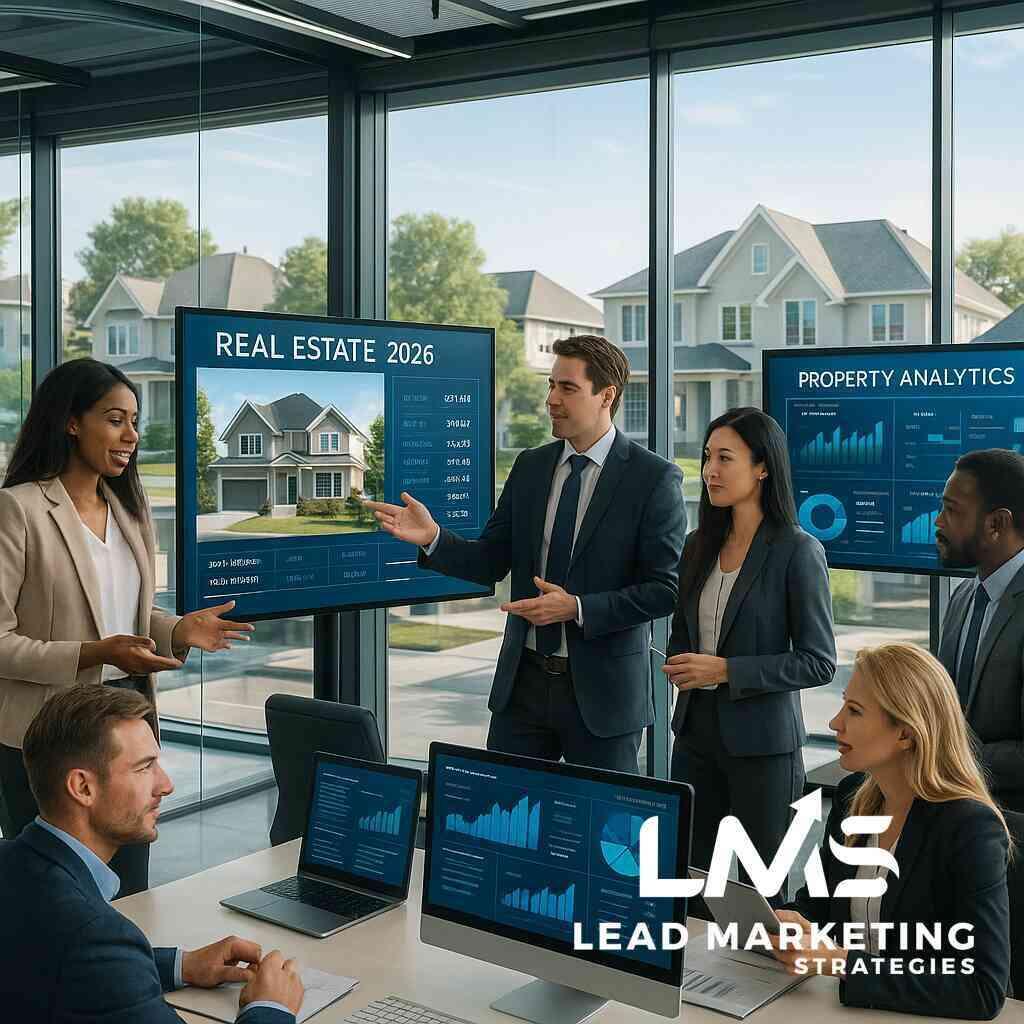
Here is the short answer: The top real estate PPC trends for 2026 are CRM-connected conversion optimization, creative-driven targeting through Performance Max and Advantage+, conversational AI for speed-to-lead, hyperlocal search execution with Local Services Ads, and strict compliance around AI-generated and virtually staged ad imagery. Agents who adapt to these five shifts get better leads at lower cost. Agents who keep running 2022-era campaigns keep paying for tire-kickers.
We manage paid campaigns for real estate businesses every day, and we see the same patterns repeat. Below is what actually matters this year, in plain language, with the tactics to go with it.
Why Is Real Estate PPC Different in 2026?
Because the platforms stopped rewarding volume and started rewarding quality signals. Google and Meta now have enough data to optimize toward whatever conversion you tell them to chase. If you tell them to chase form fills, they will find you cheap form fills. If you tell them to chase booked appointments, they will find you booked appointments.
That single change reshaped the entire discipline. Cost per click matters less than cost per qualified conversation. Broad manual targeting has largely faded in favor of automated bidding engines that learn from your downstream data. And the creative itself, not the audience settings, now does most of the segmentation work.
One more thing shifted: speed. Buyer and seller intent moves fast. A lead who fills out a form at 9 p.m. and hears back the next afternoon is often already talking to another agent. The campaigns that win are the ones that respond in seconds, not hours.
Trend 1: CRM-Connected Optimization Kills the Cheap Lead Problem
The era of celebrating a $4 lead is over. In our experience, most agents who complain that paid leads are junk are optimizing for the wrong event. The algorithm delivered exactly what it was asked to deliver.
The fix is connecting your CRM to your ad platforms so the platforms can see what happens after the click. This is the single highest-impact real estate PPC trend of 2026.
- Google Ads Offline Conversion Tracking (OCT): Push appointment bookings, signed agreements, and verified pre-approvals back into Google so Smart Bidding optimizes toward real business outcomes.
- Meta Conversions API: Send qualified lead events server-side so Meta’s Advantage+ campaigns learn which audiences actually convert downstream.
- Multi-step in-ad forms: Add a second and third qualifying question inside the lead form. Yes, it lowers raw lead volume. It also filters out passive browsers before they ever reach your inbox.
- Define “qualified” honestly: A booked appointment, a verified pre-approval, or a completed buyer consultation. Not a phone number typed into a box.
When you feed these signals back into the platforms, bidding behavior changes within a few weeks. You often see fewer leads and better ones. That trade is almost always worth making.
Trend 2: Creative Is the New Targeting
Automated campaign types like Google Performance Max and Meta Advantage+ now handle audience discovery for you. That means your ad creative has to do the job manual targeting used to do. The hook, the headline, and the first three seconds of video are your segmentation strategy.
How do you make creative do the targeting work?
Build distinct creative sets for distinct avatars. A luxury downsizer in a waterfront condo and a first-time buyer stretching for a starter home respond to completely different messages, and the platforms will route each ad to the right person if the creative speaks clearly to one of them.
- Write separate ad copy for first-time buyers, move-up buyers, luxury sellers, downsizers, and investors. Do not blend them into one generic ad.
- Feed Performance Max and Advantage+ a deep asset library: multiple headlines, descriptions, images, and short-form video. Thin asset sets starve the machine.
- Lead with short-form video. Walkthroughs, neighborhood tours, and 30-second agent intros hold attention longer and give the algorithm more signal.
- Refresh creative on a schedule. Fatigue sets in fast, and stale assets quietly raise your cost per lead.
If this feels like more creative production than you can handle, that is a signal to invest in it, not to skip it. Strong creative is now the primary lever on paid performance.
Trend 3: Speed-to-Lead Through Conversational AI
Sending paid traffic to a generic landing page and waiting for an email reply is a losing play in 2026. The first touchpoint has moved into messaging apps and AI-assisted chat.
The tactic is straightforward: route PPC traffic directly into WhatsApp Business, Facebook Messenger, or a live AI chat funnel on your site. A conversational assistant qualifies the lead within the first minute, asks the right questions, and books the appointment or hands off to you with context.
We often see the biggest gains here come from simple responsiveness, not complex automation. A lead engaged within 60 seconds is dramatically more likely to convert than one contacted the next morning. Conversational AI makes that 60-second response possible at 2 a.m. on a Sunday.
Pair this with a lead generation system built for real estate so every conversation lands in your CRM with a clear next step. Speed without follow-through is just noise.
Trend 4: Hyperlocal Search and Local Services Ads
Bidding on broad metro keywords is expensive and imprecise. The winning approach in 2026 is hyperlocal: tight geography, tight intent, and landing pages that reflect the actual neighborhood.
What does hyperlocal PPC execution look like?
- Google Local Services Ads (LSAs): These put your profile and credentials at the top of local search results. Keep your profile complete and your response times sharp, because LSA ranking rewards both.
- Strict negative keyword lists: Cut “rent,” “apartments,” “jobs,” “free,” “Zillow,” and every other term that burns budget on people who will never list or buy with you. Review search terms weekly.
- Localized landing pages: Send clicks to pages built for one neighborhood or one listing, with real-time IDX data or current market stats. Generic homepages waste the click.
- Geo-targeting by radius and zip: Bid hardest where you actually have listing history and name recognition.
This is where paid search and organic strategy reinforce each other. A strong local SEO foundation makes your paid placements convert better, because prospects who see your ad and then search your name find a credible presence. Our guide to hyper-local SEO for real estate agents covers how to build that foundation alongside your ad spend.
If you are competing against the big portals for local attention, the combination of paid and organic is how you win. We wrote about this in detail in our breakdown on how real estate marketing strategies beat Zillow in local search.
Trend 5: Compliance and AI Transparency in Ad Creative
New rules now penalize deceptive or unlabeled ad assets. This is not a minor detail. It affects what you can put in a paid ad and how you label it.
- Disclose AI-edited imagery: Any AI-enhanced, AI-staged, or virtually staged property photo used in an ad creative needs a visible disclosure label. Platforms and regulators are both watching.
- Follow fair housing rules in targeting: Ad targeting parameters must comply with evolving housing and privacy standards. Review your audience settings with a compliance mindset.
- Keep claims honest: No fabricated stats, no invented review counts, no “guaranteed sale” language. Your reputation management strategy depends on the credibility your ads promise.
Compliance is not glamorous, but agents who get it wrong lose accounts and ad access. Build the review step into your campaign process now.
How Should Agents Budget for Real Estate PPC in 2026?
Budget around qualified conversations, not clicks. Work backward from your goal: how many appointments do you need, what percentage of leads book, and what does a booked appointment cost in your market? That math tells you what you can afford per click.
In our experience, agents get the most from a budget split across three lanes: Local Services Ads and high-intent search for people actively looking, Performance Max and Advantage+ for broader discovery, and retargeting to recapture people who engaged but did not convert. Test small, measure against booked appointments, and scale what proves out. Our Google Ads management for real estate team runs this exact structure for agents who would rather list homes than manage campaigns.
Frequently Asked Questions About Real Estate PPC Trends
Are Facebook ads still worth it for real estate leads in 2026?
Yes, with one condition: you connect your CRM and optimize for qualified leads instead of raw form fills. Meta Advantage+ campaigns perform well when they receive downstream conversion signals and strong creative. Without those signals, they will happily deliver cheap, low-quality leads. The platform is not the problem. The optimization target usually is.
What is the biggest mistake agents make with PPC right now?
Optimizing for the wrong conversion. Most underperforming campaigns are chasing form fills instead of booked appointments or verified pre-approvals. The second biggest mistake is slow follow-up. A paid lead that sits untouched for a day is often a lost client.
Do I need video ads for real estate PPC?
You do not strictly need them, but they consistently outperform static creative in our experience, especially for discovery campaigns. Short walkthroughs, neighborhood tours, and agent intro videos hold attention and give automated bidding engines more to work with. Start with one or two simple videos and test.
How do Local Services Ads fit into a real estate PPC strategy?
LSAs capture high-intent local searches at the top of results and reward responsiveness and profile completeness. They work best as part of a mix alongside search and social campaigns, not as a standalone channel. Keep your profile current and answer every lead quickly.
Can I run paid ads without a big budget?
Yes. Focus your spend on high-intent local search and LSAs first, add strict negative keywords, and send traffic to tightly localized landing pages. A modest budget aimed at the right zip codes and the right search intent beats a large budget spread thin across a metro area.
Get Help Putting These Real Estate PPC Trends to Work
Reading about trends is easy. Building campaigns that actually produce qualified appointments takes setup, tracking, and ongoing tuning. That is what our team does for real estate businesses every day.
If you want a paid strategy built around your market, your listings, and your CRM, we would be glad to help. You can book a free consultation with our team, or call us directly at (833) 532-3100. We will walk through your current campaigns, your tracking, and where the qualified leads are leaking out.
And if you want to keep an eye on your campaigns from anywhere, download our mobile app: iOS download or Android download. It puts your lead activity and marketing performance in your pocket, which matters when you are between showings all day.
The agents who win in 2026 are not spending the most. They are tracking the right conversions, responding the fastest, and keeping their creative sharp. Start with one trend from this list this week. Then build from there.
The Real Estate Marketing Strategies Team
Our team of marketing experts specializes in helping real estate agencies grow their businesses through strategic digital marketing, SEO, and customer acquisition.
View all articles