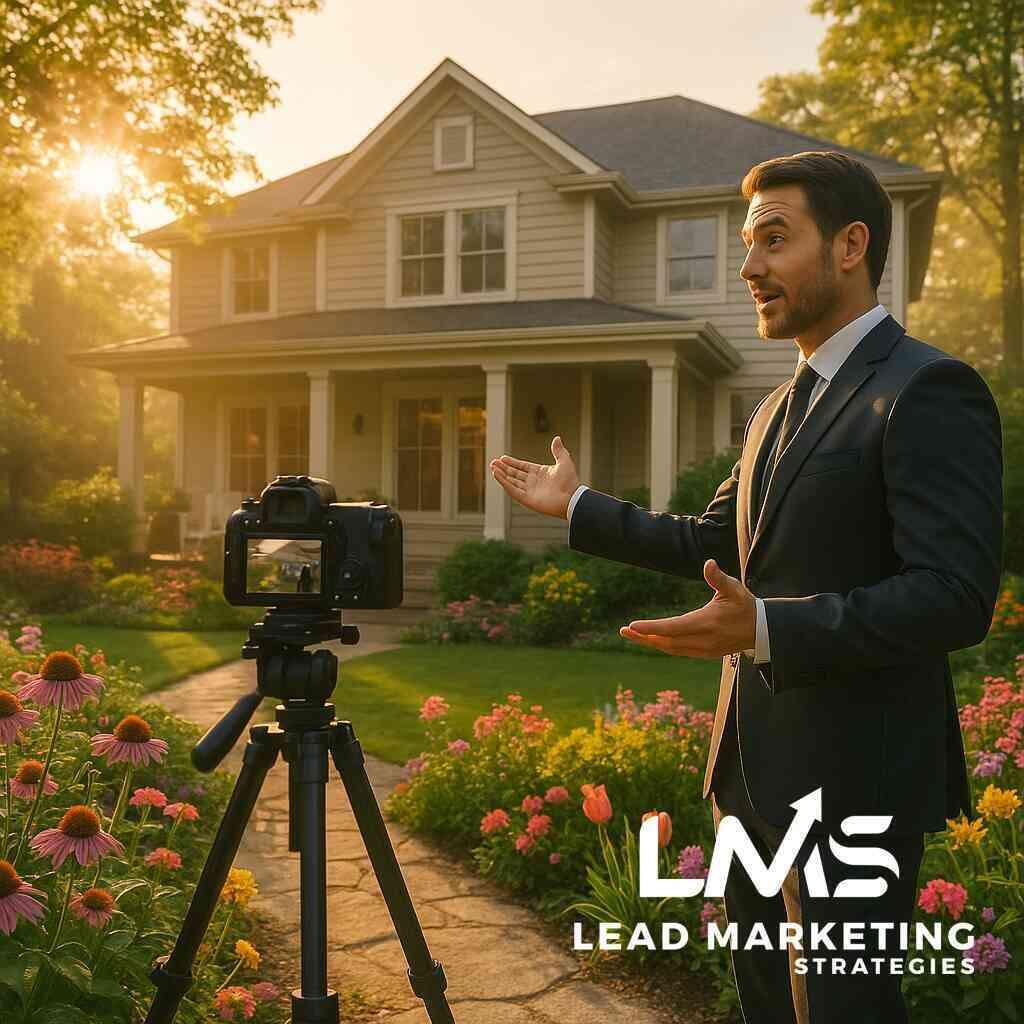

Most agents know they should be making video. Few have a plan that turns it into listings. That gap is expensive. In our experience working with real estate teams across the country, the agents who win on video are not the ones with the fanciest cameras. They are the ones with a repeatable system tied to revenue.

This guide walks you through how to build a real estate video marketing plan in 5 steps in 2026, from setting GCI-driven goals to turning views into appointments. No fluff. Just the framework we use and the tactics that actually move the needle.
What Is a Real Estate Video Marketing Plan?
A real estate video marketing plan is a written system that connects your video output to your income goals. It defines what you film, where you publish it, how often you post, and how you track whether it produces leads. It is not a content calendar full of random ideas. It is a funnel with a job at every stage.
In our experience, the difference between agents who get listings from video and agents who burn out is almost never talent. It is structure. A plan tells you what to shoot on Monday morning so you are not staring at your phone wondering what to post.
Why Does Video Matter More Than Ever for Real Estate Agents in 2026?
Video is now the default way buyers and sellers research agents. They watch before they call. Short-form clips build familiarity fast, and long-form property tours on YouTube give you a searchable library that keeps working for years. Meanwhile, your competitors are posting. If you are invisible on video, you are invisible in the consideration set.
Here is the practical angle: video does double duty. It feeds social discovery, and it feeds search. A well-titled neighborhood tour on YouTube can rank and drive traffic long after the listing sells. Pair that with a strong real estate SEO strategy and you build an asset instead of a feed post that disappears in 48 hours.
Step 1: Tie Your Video Plan to GCI Goals
Start with money, not cameras. Decide what the video is supposed to produce. Listing generation and buyer acquisition need different content, different platforms, and different calls to action. Pick your primary goal for the quarter and build backward from there.
Work the math before you work the camera
Map the funnel in plain numbers. How many views does a typical video get you? What percentage of viewers engage? How many of those turn into a conversation? How many conversations become appointments, and how many appointments close? You will not have perfect data at first. Estimate, then refine as real numbers come in. That is how you learn which video formats actually earn their keep.
We often see agents skip this step and then wonder why video “doesn’t work.” It usually works. They just never connected the output to a goal, so they never noticed the leads that came in sideways through DMs and referral conversations.
Step 2: Build Content for All Three Funnel Stages
Your plan needs video for discovery, consideration, and decision. Skipping a stage leaves money on the table. Here is how we structure it.
Top of funnel: discovery
- Vertical reels and shorts, 15 seconds or less, built for Instagram Reels, TikTok, and YouTube Shorts
- Fast neighborhood teasers and quick property previews
- Local curiosity hooks that stop the scroll in the first three seconds
Middle of funnel: consideration
- Neighborhood and community lifestyle guides
- Monthly market update videos
- Agent introduction videos that show personality and local knowledge
- “Story of the sale” narratives that show how you solved a real problem
Bottom of funnel: decision
- Full listing walkthroughs with drone or aerial context
- 3D virtual tours (Matterport-style) for out-of-town buyers
- Client testimonials, ideally 60 seconds or longer for YouTube
The mistake we see most is posting only bottom-of-funnel content. Full walkthroughs are great, but they do not build an audience. You need discovery content to bring people in and decision content to close them.
Step 3: Choose Your Platforms and Posting Cadence
Two engines, running at the same time. That is the model. Short-form social handles discovery. YouTube handles search and long-term authority. You need both, but you do not need to be everywhere.
Social discovery engine
Instagram Reels, TikTok, and YouTube Shorts reward frequency and speed. Vertical, fast-paced, posted consistently. This is where new eyeballs find you.
Search and authority hub
YouTube is your library. Long-form, searchable guides and flagship property tours live here. These videos rank, get shared, and get embedded in your website and emails. If you want a deeper look at ranking locally, our breakdown of local map pack ranking tactics pairs well with a video-first approach.
The cadence rule
Here is the minimum we recommend: one property walkthrough cut and published on listing day, plus roughly one personal brand or local market video per week. That is achievable for a solo agent and scalable for a team. Consistency beats volume. A steady weekly rhythm will outproduce a burst of ten videos followed by a month of silence.
If you want help choosing the right channels for your market, our social media marketing for real estate team builds these plans every day.
Step 4: Set Up Your Gear and Batch Your Production
You do not need a film crew. You need a repeatable setup and a production day. Standardize your gear so you stop making decisions every time you film.
What equipment do you actually need?
- A recent smartphone with a clean lens and plenty of storage
- A stabilizer or gimbal for smooth walking shots
- A lapel mic for clean audio, because bad audio kills good video
- A basic tripod for talking-head and market update videos
- A drone only if you are FAA Part 107 compliant, or hire a licensed pilot
That is it. We often see agents buy thousands of dollars of gear before they have posted ten videos. Start simple. Upgrade when the plan is working and the bottleneck is equipment, not consistency.
Batch to remove friction
Film several videos in one session. Shoot three or four short clips, one market update, and one neighborhood piece in a single afternoon. Edit and schedule them across the next few weeks. Batching is how busy agents stay consistent when showings and closings pile up.
Step 5: Distribute, Measure, and Turn Views Into Appointments
Publishing is half the job. The other half is getting that video in front of the right people and tracking what happens next.
Distribute everywhere that matters
- Embed videos on your listing pages and neighborhood pages
- Add video to your Google Business Profile to support local visibility
- Drop clips into automated email sequences and follow-up campaigns
- Repurpose one long video into several short clips, carousel posts, and a newsletter section
Measure what predicts revenue
Stop staring at raw view counts. Watch completion rate and watch-time percentage instead. Those numbers tell the algorithm to push your video further, and they tell you whether your hook is working. Then audit lead attribution. Track inbound DMs, QR codes on sign riders, and links in your YouTube descriptions. Know which video produced which appointment.
Attribution is where most agents get stuck. If you want a system that connects content to booked appointments, our real estate lead generation services are built for exactly that. And when your videos start bringing in reviews and referrals, a solid reputation management plan keeps that momentum compounding.
Ready to stop guessing and get a plan built for your market? You can book a free consultation with our team and we will map it out with you.
What Are the Best Real Estate Video Ideas for 2026?
The best video ideas solve a specific problem for a specific local audience. Generic content gets scrolled past. Local, useful, and specific content gets saved and shared. Here are the formats we see perform.
- Neighborhood lifestyle tours: walk the streets, show the coffee shop, the park, the commute
- Market update videos: one clear takeaway per video, posted monthly
- Story of the sale: replace “just sold” graphics with a narrative about how you solved a seller’s problem
- Local news tie-ins: film around zoning changes, school district updates, or airport and commercial expansion
- Listing day walkthroughs: cut and published the same day the listing goes live
- Buyer and seller tip series: short, practical answers to the questions you hear every week
The repurposing matrix is your friend. One five-minute YouTube neighborhood tour can become three vertical clips, two carousel posts, and a section in your email newsletter. Film once, publish many times.
How Do You Turn Video Views Into Actual Listing Appointments?
Views become appointments when there is a clear next step and a reason to take it. Put a call to action in every video, spoken and on screen. Make it easy to DM you, click your link, or scan a QR code. Then follow up fast. Speed matters more than polish in the follow-up stage.
We often see agents get great engagement and then let the conversation die because there was no system behind it. Build the follow-up into the plan from day one. A video that generates a DM is only valuable if someone answers that DM within the hour.
Should You Hire a Videographer or Shoot It Yourself?
Shoot it yourself for brand and market content. Hire a pro for flagship listings and high-value properties. Your face and voice build trust faster than any polished production, and consistency matters more than cinematic quality for social content. Save the videographer budget for listings where the production value justifies the spend.
How Long Should Real Estate Marketing Videos Be in 2026?
It depends on the platform and the job. Shorts and reels should run 15 seconds or less. Testimonials and decision-stage content should run 60 seconds or longer for YouTube. Market updates land best around 60 to 90 seconds. Match length to intent, not to a rule.
How Many Videos Should a Real Estate Agent Post Per Week?
One property walkthrough on listing day, plus one brand or market video per week, is a strong baseline. If you can do more without breaking consistency, do more. If you cannot, protect the baseline. A steady weekly rhythm beats sporadic bursts every time.
What Equipment Do You Need to Shoot Real Estate Videos on Your Phone?
A recent smartphone, a stabilizer, a lapel mic, and a tripod. That covers most of what you need. Add a drone only if you are FAA Part 107 compliant or you hire a licensed pilot. Keep it simple and upgrade only when equipment becomes the real bottleneck.
How Do You Market a Listing With Reels and YouTube?
Lead with a short reel on listing day to build awareness. Publish a longer walkthrough on YouTube for search and buyers who want detail. Embed both on the listing page. Then push the reel into your email list and social channels. One listing, multiple touchpoints, all pointing back to one property.
Let Us Build Your Video Marketing Plan
You do not have to figure this out alone. Our team builds video marketing plans that connect content to closings, and we do it for agents and teams every day. If you want a plan tailored to your market, book a free consultation and we will walk through your goals together. Prefer to talk now? Call us at (833) 532-3100.
And take our team with you. Download the Lead Marketing Strategies mobile app for iOS or Android to stay connected to your plan, your leads, and your results wherever the day takes you.
Every article is written by one of our founders and independently reviewed by the other before it goes live.

Dominique Key is the Chief Marketing Officer and Co-Owner of Real Estate Marketing Strategies. She helps agents, teams, and brokerages build brands and real estate lead generation systems that grow their real estate business. When she is not guiding client strategy, she is running the family business with her husband Ken.

Ken Key is the Chief Technology Officer and Co-Owner of Real Estate Marketing Strategies. A full stack software, AI, and SEO engineer, he helps agents and brokers turn real estate marketing and lead generation into measurable growth. He runs the family business with his wife, Dominique, and treats every client's pipeline like his own.